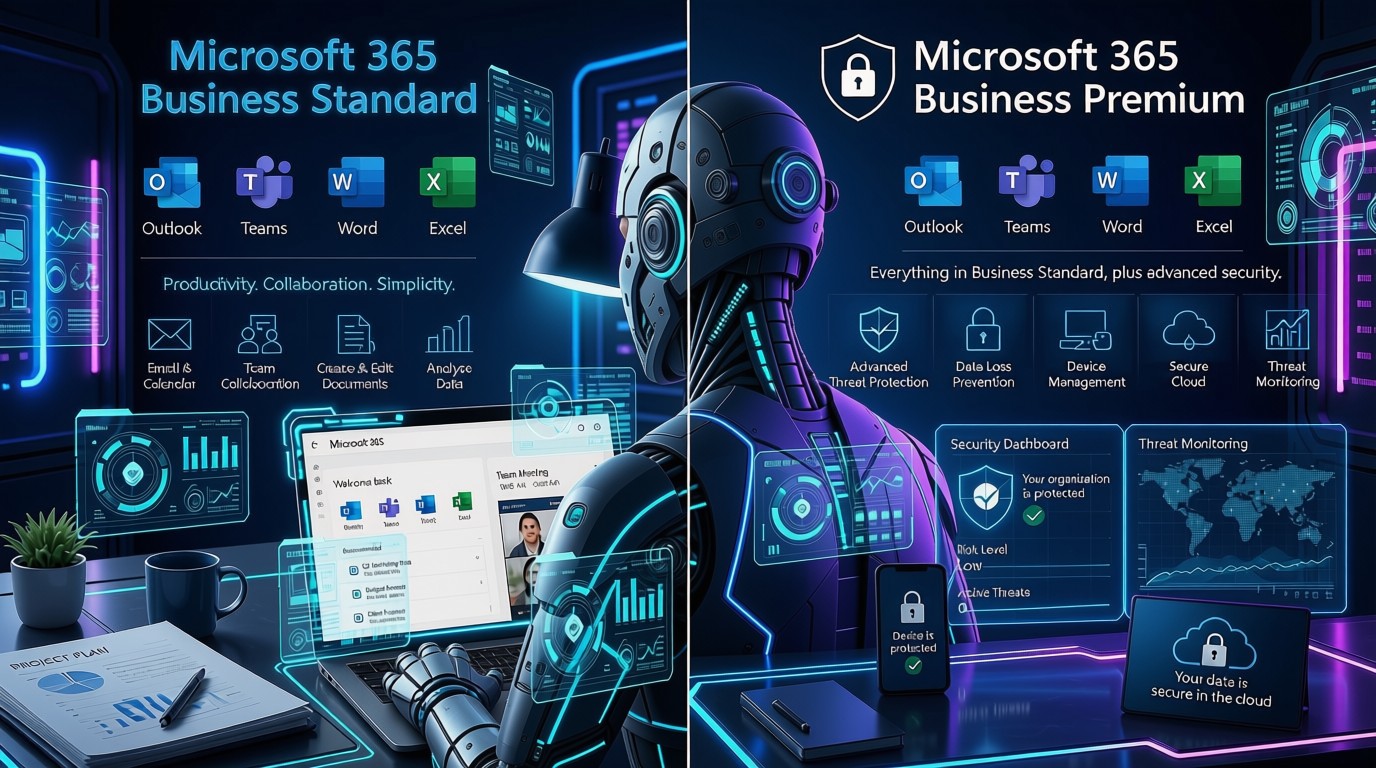



Microsoft 365 has become one of the most targeted business platforms for cybercriminals. With access to email, files, collaboration tools, and sensitive company data, a single compromised account can provide attackers with a gateway into an entire organisation.
As cyber threats continue to evolve, businesses must take a proactive approach to protecting user identities and securing access to critical systems. Fortunately, Microsoft 365 includes a range of powerful security features that can significantly reduce risk when implemented correctly.
In this article, we’ll explore the top seven ways to secure Microsoft 365 accounts and help strengthen your organisation’s overall security posture.
1. Enable Multi-Factor Authentication (MFA)
If you’re only going to implement one security measure, make it Multi-Factor Authentication (MFA).
MFA requires users to provide an additional verification method beyond their password, such as:
- Microsoft Authenticator approval
- Biometric verification
- FIDO2 security keys
- SMS or phone verification (less secure, but still better than passwords alone)
Even if a password is compromised through phishing, credential stuffing, or brute-force attacks, MFA adds a crucial layer of protection that significantly reduces the likelihood of unauthorised access.
Best Practices
- Use Microsoft Authenticator or FIDO2 security keys wherever possible.
- Disable legacy authentication protocols that can bypass MFA.
- Require MFA for all users, not just administrators.
- Consider implementing passwordless authentication for enhanced security.
2. Implement Conditional Access Policies
Conditional Access is often described as the “if-then” engine of Microsoft Entra ID.
It allows organisations to make intelligent access decisions based on factors such as:
- User identity
- Device compliance
- Geographic location
- Sign-in risk level
- Applications being accessed
For example:
- If a user attempts to sign in from an unfamiliar country, then require MFA or block access.
- If a user accesses sensitive data from an unmanaged device, then limit or prevent access.
Key Policies to Consider
- Block sign-ins from high-risk countries or regions.
- Require MFA for administrative roles.
- Restrict access to non-compliant devices.
- Deny legacy authentication methods.
- Require approved mobile applications for access.
Conditional Access is a cornerstone of a modern Zero Trust security strategy, helping organisations verify every access request rather than automatically trusting users and devices.
3. Strengthen Password and Identity Protection
Although passwords are no longer sufficient on their own, they still play an important role in account security.
Weak, reused, or compromised passwords remain one of the most common causes of Microsoft 365 account breaches.
Recommended Actions
- Enforce strong password policies.
- Enable Microsoft Entra Password Protection.
- Block common and easily guessed passwords.
- Monitor for leaked or compromised credentials.
- Encourage the use of password managers.
- Move towards passwordless authentication where possible.
Focus on Modern Password Security
Rather than forcing frequent password changes, organisations should prioritise:
- Long, memorable passphrases
- Unique passwords for every account
- Monitoring for compromised credentials
- Strong MFA enforcement
The goal should be reducing reliance on passwords rather than simply increasing password complexity.
4. Protect Privileged Accounts with Least Privilege Access
Administrative accounts are among the most valuable targets for attackers.
A compromised global administrator account can provide unrestricted access to users, applications, data, and security settings throughout the Microsoft 365 environment.
Apply the Principle of Least Privilege
Users should only be granted the permissions necessary to perform their roles.
This includes:
- Limiting the number of Global Administrators
- Using separate accounts for administrative tasks
- Removing unnecessary permissions
- Conducting regular access reviews
- Implementing Role-Based Access Control (RBAC)
Use Privileged Identity Management (PIM)
Microsoft Entra Privileged Identity Management enables organisations to:
- Provide just-in-time administrative access
- Require approval before elevated access is granted
- Enforce time-limited permissions
- Audit privileged actions
This significantly reduces the risk associated with permanently assigned administrator privileges.
5. Secure Email Against Phishing and Business Email Compromise
Email remains one of the most common entry points for cyberattacks.
Many Microsoft 365 account compromises begin with:
- Phishing emails
- Credential harvesting campaigns
- Malicious links
- Malware attachments
- Business Email Compromise (BEC) attacks
Strengthen Protection with Microsoft Defender for Office 365
Microsoft Defender for Office 365 offers advanced protection through:
- Safe Links
- Safe Attachments
- Anti-phishing policies
- Impersonation detection
- Real-time threat intelligence
Additional Security Measures
- Implement SPF, DKIM, and DMARC.
- Deliver regular phishing awareness training.
- Conduct attack simulation exercises.
- Monitor mailbox activity for suspicious behaviour.
Technology plays an important role, but well-informed users remain one of the strongest lines of defence against phishing attacks.
6. Monitor Sign-In Activity and Security Alerts
Preventing attacks is important, but detecting suspicious activity quickly is equally critical.
Microsoft 365 provides extensive monitoring capabilities that help security teams identify threats before they become serious incidents.
Watch for Warning Signs
Common indicators of compromise include:
- Impossible travel events
- Repeated failed sign-in attempts
- Logins from unfamiliar locations
- Unexpected mailbox activity
- Privilege escalation events
Leverage Microsoft’s Security Tools
Consider using:
- Microsoft Defender XDR
- Microsoft Sentinel
- Microsoft Entra Identity Protection
- Unified Audit Logs
- Microsoft Secure Score
Continuous monitoring can help organisations detect and respond to threats before significant damage occurs.
7. Keep Devices Secure and Compliant
Even the strongest identity controls can be undermined if users access Microsoft 365 from compromised devices.
A malware-infected laptop or unmanaged mobile device can expose user credentials, business data, and company communications.
Improve Endpoint Security
Ensure devices are:
- Encrypted using BitLocker
- Protected by Microsoft Defender for Endpoint
- Regularly patched and updated
- Managed through Microsoft Intune
- Continuously monitored for threats
Enforce Device Compliance
Compliance policies should verify that:
- Operating systems are up to date
- Antivirus protection is enabled
- Device encryption is active
- Security policies are being followed
Conditional Access can then be used to prevent non-compliant devices from accessing Microsoft 365 resources.
Bonus Tip: Embrace a Zero Trust Security Strategy
Modern security is built on the principle of:
Never trust. Always verify.
Rather than automatically trusting users because they’re inside the network, Zero Trust continuously validates identities, devices, and access requests.
The key pillars of Zero Trust include:
- Verifying identities continuously
- Applying least privilege access
- Securing endpoints
- Protecting data and applications
- Monitoring activity at all times
Many of the Microsoft 365 controls discussed in this article directly support a Zero Trust approach.
Final Thoughts
As organisations increasingly rely on Microsoft 365 for communication, collaboration, and data storage, user identities have become a primary target for cybercriminals.
The good news is that many of the most effective security controls are already available within the Microsoft ecosystem. By focusing on the following seven areas, businesses can significantly reduce the risk of account compromise:
1. Enable Multi-Factor Authentication (MFA)
2. Implement Conditional Access policies
3. Strengthen password and identity protection
4. Protect privileged accounts
5. Secure email against phishing attacks
6. Monitor sign-ins and security alerts
7. Secure and manage endpoint devices
No single security control can eliminate risk entirely. The strongest defence comes from combining technology, policies, monitoring, and user awareness into a layered security strategy.
Investing time in securing Microsoft 365 accounts today can help prevent costly breaches, minimise disruption, and ensure your organisation remains protected against evolving cyber threats.