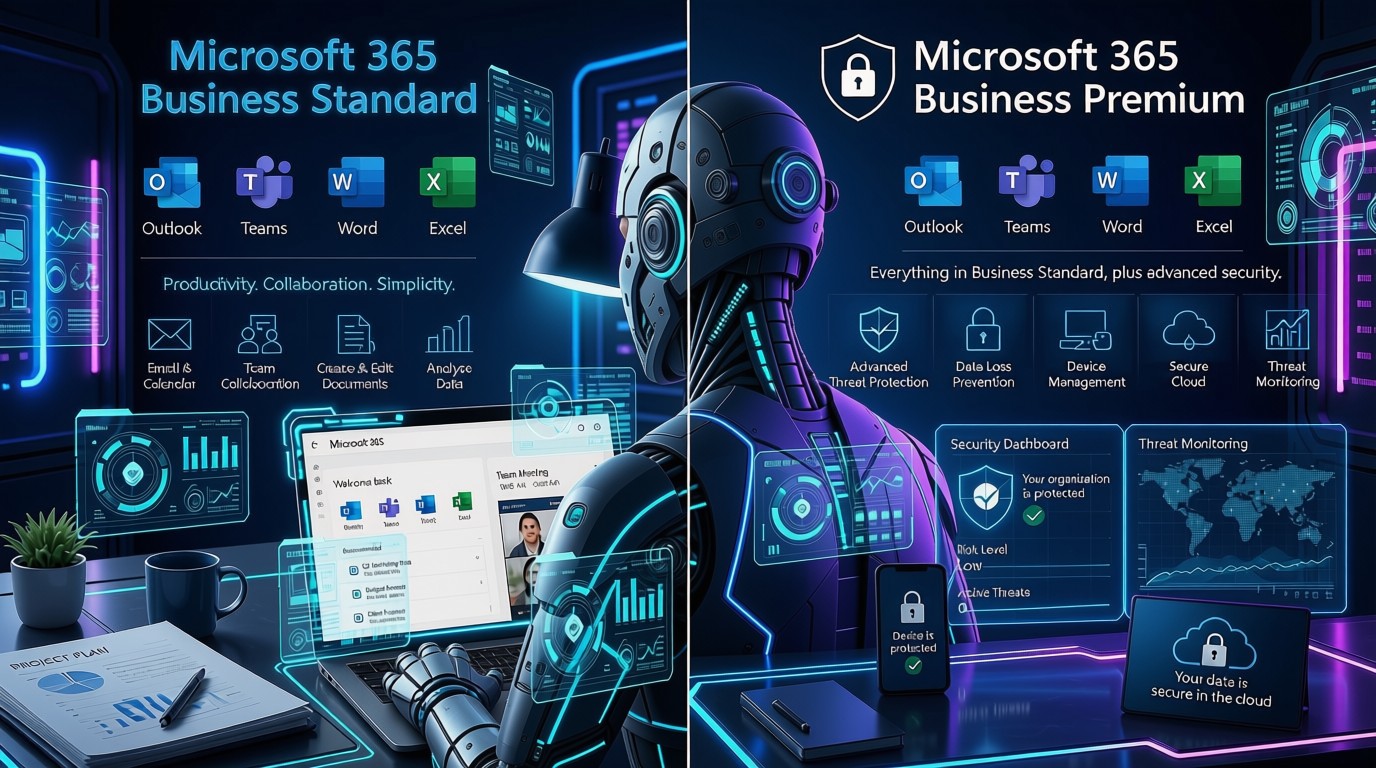



Cybersecurity is no longer just an IT concern, it’s a business necessity. While many organisations use Microsoft 365 daily for email, collaboration, and productivity, few take full advantage of the powerful security features already included within their subscription.
Many businesses invest in additional security tools without realising that Microsoft 365 contains a wide range of built-in protections designed to safeguard users, data, and devices. If you’re only using basic password protection and antivirus software, you could be missing out on security capabilities that significantly reduce your risk of cyberattack.
Here are some of the most valuable Microsoft 365 security features your business may not be using.
1. Conditional Access: Intelligent Security Controls
Traditional security assumes everyone inside your network can be trusted. Modern security doesn’t.
Conditional Access, powered by Microsoft Entra ID (formerly Azure Active Directory), allows organisations to control access based on factors such as:
- User identity
- Device compliance
- Location
- Application being accessed
- Sign-in risk level
For example, you can:
- Allow access from company-managed devices only
- Require additional authentication when users sign in from unfamiliar locations
- Block access from high-risk countries
- Restrict access to sensitive applications outside business hours
Rather than applying security uniformly to every user, Conditional Access creates intelligent policies that balance security and usability. Microsoft describes Conditional Access as a key enforcement mechanism within its Zero Trust security model.
Business Benefit
Conditional Access helps prevent unauthorised access while reducing friction for legitimate users.
2. Passwordless Authentication
Passwords remain one of the most common attack vectors for cybercriminals.
Phishing, password spraying, credential stuffing, and password reuse attacks all rely on compromising user credentials. Microsoft now offers several passwordless authentication options through Microsoft Entra ID, including:
- Windows Hello for Business
- Microsoft Authenticator
- FIDO2 Security Keys
- Passkeys
These methods use biometrics, device-based authentication, or cryptographic credentials instead of traditional passwords. Microsoft highlights passwordless authentication as a way to improve security while enhancing user experience and reducing phishing risk.
Business Benefit
- Stronger protection against phishing attacks
- Fewer password reset requests
- Faster and more convenient user sign-ins
3. Microsoft Defender for Office 365
Many organisations assume email security begins and ends with spam filtering.
Unfortunately, modern cyber threats are far more sophisticated.
Microsoft Defender for Office 365 includes advanced features such as:
Safe Links
Rewrites URLs within emails and verifies them when users click them, helping prevent access to malicious websites.
Safe Attachments
Scans and detonates suspicious email attachments in a secure sandbox environment before delivery.
Anti-Phishing Protection
Uses machine learning and impersonation detection to identify:
- Business Email Compromise (BEC)
- CEO fraud attempts
- Domain spoofing
- Credential harvesting attacks
Business Benefit
Email remains the most common route for cyberattacks. Enhanced protection can dramatically reduce successful phishing and malware incidents.
4. Data Loss Prevention (DLP)
Data breaches don’t always come from external attackers.
Sometimes employees accidentally send sensitive information to the wrong recipient or store confidential data insecurely.
Microsoft 365 Data Loss Prevention enables organisations to detect and protect information such as:
- Financial records
- Customer information
- Personal identifiable information (PII)
- National Insurance numbers
- Payment card details
Policies can automatically:
- Block sending certain information externally
- Warn users before sharing sensitive data
- Generate alerts for compliance teams
Business Benefit
Protects sensitive information while supporting GDPR and regulatory compliance requirements.
5. Microsoft Secure Score
Many organisations don’t know how secure their Microsoft 365 environment actually is.
Microsoft Secure Score provides a measurable security benchmark for your tenant by:
- Assessing configurations
- Identifying vulnerabilities
- Providing improvement recommendations
- Tracking progress over time
Examples of recommended actions include:
- Enabling MFA
- Configuring Conditional Access
- Improving device management
- Strengthening email protection
Business Benefit
Gives IT teams a clear roadmap for improving cyber resilience without extensive security audits.
6. Sensitivity Labels and Information Protection
Not all data should be treated equally.
Microsoft Information Protection allows organisations to classify and protect data through Sensitivity Labels such as:
- Public
- Internal
- Confidential
- Highly Confidential
Labels can automatically apply protections including:
- Encryption
- Restricted access
- Watermarking
- Sharing controls
These protections remain with the file even after it leaves your organisation.
Business Benefit
Reduces the risk of sensitive information being shared with the wrong people.
7. Multi-Factor Authentication (MFA)
While it may seem basic, many businesses still haven’t fully deployed MFA across all users.
MFA requires users to provide additional verification beyond a password, such as:
- Authenticator app approval
- Biometrics
- Hardware security keys
Microsoft reports that stronger authentication methods significantly reduce the likelihood of account compromise and are foundational to a modern security posture.
Business Benefit
One of the most effective and affordable cybersecurity controls available.
8. Audit Logging and Security Monitoring
Every Microsoft 365 tenant generates valuable security information.
Audit logs track activities such as:
- User sign-ins
- File access
- Email activity
- Permission changes
- Administrative actions
When properly configured, these logs can help identify:
- Suspicious behaviour
- Insider threats
- Unauthorised access attempts
- Compliance concerns
Business Benefit
Provides visibility, accountability, and evidence when investigating security incidents.
9. Mobile Device Management (MDM)
With hybrid working now standard, employees increasingly access company data from personal devices.
Microsoft Intune and built-in mobile management capabilities allow organisations to:
- Enforce device security policies
- Require encryption
- Manage mobile applications
- Remotely wipe corporate data from lost devices
Business Benefit
Protects business information without compromising employee flexibility.
Are You Getting Full Value from Microsoft 365?
Many organisations pay for Microsoft 365 licences that include advanced security features but never activate them. This leaves gaps that cybercriminals can exploit and reduces the value of your technology investment.
At Capella Computer Solutions, we regularly discover that businesses have security capabilities available within their existing Microsoft 365 subscriptions that are either underused or not configured at all.
A Microsoft 365 security review can uncover opportunities to:
- Strengthen cybersecurity
- Improve compliance
- Reduce business risk
- Enhance user productivity
- Maximise your Microsoft investment
Final Thoughts
Microsoft 365 is far more than a productivity platform. It has evolved into a comprehensive security ecosystem capable of protecting identities, devices, applications, and data.
Features such as Conditional Access, Passwordless Authentication, Defender for Office 365, Data Loss Prevention, and Secure Score can significantly improve your organisation’s security posture, often without requiring additional software purchases.
The question isn’t whether these tools are available; it’s whether you’re making the most of them.
Need help securing your Microsoft 365 environment? Contact Capella Computer Solutions for a Microsoft 365 Security Health Check and discover how to unlock the full security potential of your existing investment.